Original price was: $79.00.$49.00Current price is: $49.00.
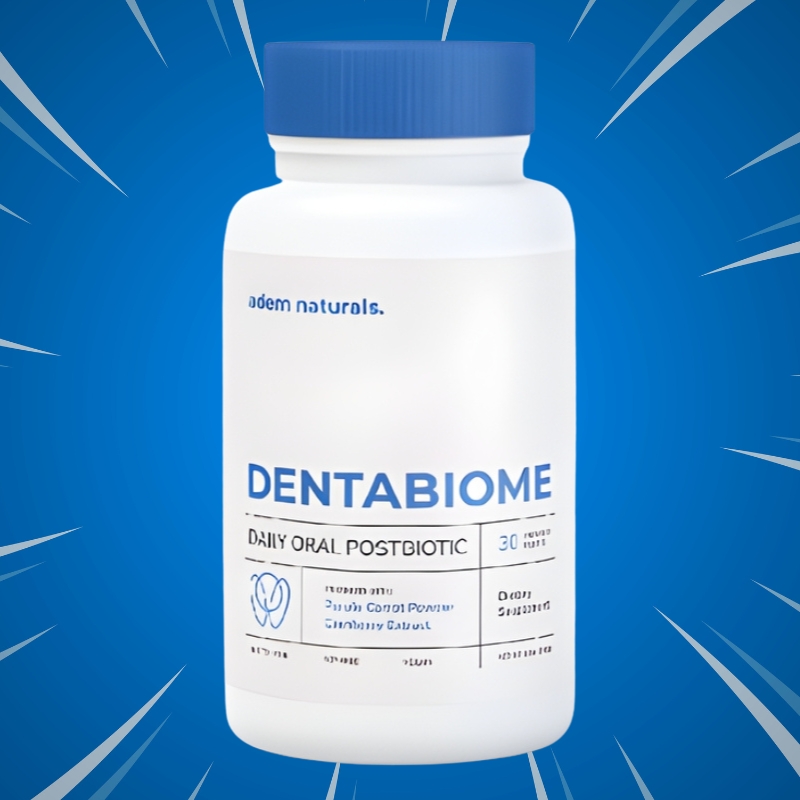
DentaBiome is a convenient chewable oral postbiotic designed to support a balanced mouth microbiome, fresher breath, and overall oral wellness. Formulated with targeted Lactobacillus strains, xylitol, and plant-based compounds, it works directly in the mouth to complement your daily brushing and flossing routine. Unlike traditional supplements, its dissolve-in-mouth format helps ingredients interact where they matter most. Ideal for adults seeking an easy, travel-friendly addition to their oral-care routine, DentaBiome offers a modern, science-informed approach to maintaining a cleaner, healthier-feeling mouth—without replacing professional dental care.
Description
Oral health is about more than brushing, flossing, and scheduling regular dental visits. In recent years, researchers have paid growing attention to the oral microbiome—the diverse community of bacteria and other microorganisms that live in the mouth and influence breath, plaque formation, gum health, and the overall balance of the oral environment. That interest has helped fuel a wave of new supplements marketed for teeth and gums, including probiotic, postbiotic, mineral, and botanical blends designed to support the mouth in ways traditional oral-care products may not. DentaBiome is one of the more heavily promoted products in this category, positioning itself as an oral postbiotic chewable tablet formulated to support a healthier microbial balance, fresher breath, and a cleaner-feeling mouth. On its official website, the brand describes DentaBiome as a chewable “oral postbiotic formula,” highlights a mix of Lactobacillus-derived compounds and plant-based ingredients, and emphasizes convenience, direct-to-consumer ordering, and a 60-day money-back guarantee.
From an editorial standpoint, the important question is not whether the marketing sounds compelling. The better question is whether the ingredients and delivery format make scientific sense, whether the claims are proportionate to the available evidence, and whether consumers should view DentaBiome as a miracle fix or as a more modest wellness product that may fit into a broader oral-care routine. The current science around xylitol, oral-microbiome modulation, certain Lactobacillus strains, and plant polyphenols does suggest there may be value in microbiome-aware strategies for supporting oral health. At the same time, that is not the same thing as proving that one branded supplement will transform teeth or reverse established dental disease. For that reason, this review takes a balanced approach: we look at the formula, the ingredient rationale, the available evidence, the limitations, and the practical considerations that matter before purchasing. This article is for educational purposes only and is not a substitute for personalized advice from a dentist or physician.
Product Overview
Product Name: DentaBiome
Formulation: Oral postbiotic chewable tablet
Key Ingredients: Dual-Strain L. plantarum Complex, L. salivarius, L. rhamnosus, BioFresh Clean Complex, xylitol, purple carrot powder, cranberry extract
Bottle Contents: The sales page presents 2-, 3-, and 6-bottle packages; the specific tablet count per bottle should be confirmed on the product label or checkout page
Guarantee: 60-day money-back guarantee
Cost:
- 2 bottles: $79 each, total $158
- 3 bottles: $69 each, total $207, plus 2 bonuses and free U.S. shipping
- 6 bottles: $49 each, total $294, plus 2 bonuses and free U.S. shipping
What is DentaBiome?
DentaBiome is a chewable oral-health supplement sold through its official website and marketed as a postbiotic formula rather than a standard probiotic. That distinction matters because probiotics typically contain live microorganisms, while postbiotics generally refer to non-living microbial byproducts, metabolites, or cellular components that may still exert biological activity. The official sales page frames DentaBiome as a next-generation oral wellness option intended to work directly in the mouth, where the chewable format allows the active compounds to mix with saliva and contact the teeth, tongue, and gumline before being swallowed. The formula combines Lactobacillus-related components with xylitol and plant-derived ingredients often discussed in oral-health research.
In plain language, DentaBiome is trying to appeal to people who feel that conventional oral hygiene is not always enough on its own. That includes consumers looking for additional support for mouth freshness, plaque control, or oral-microbiome balance. The brand leans heavily on the idea that targeted ingredients can help create a less favorable environment for undesirable oral bacteria. That idea is not inherently unreasonable; oral health is influenced by bacterial ecology, acid exposure, saliva flow, diet, and hygiene habits. Still, a supplement like this should be viewed as an adjunct, not a replacement for brushing with fluoride toothpaste, flossing or interdental cleaning, limiting frequent sugar exposure, and maintaining regular professional dental care.
One important nuance for consumers is that DentaBiome’s website uses dramatic language about oral-health transformation. That kind of copy may be persuasive, but it goes beyond what can be firmly concluded from ingredient-level evidence alone. A more medically responsible way to frame the product is this: DentaBiome is a direct-to-consumer oral wellness supplement built around postbiotic and supportive ingredients that may help support a healthier oral environment in some users, but it should not be treated as a substitute for diagnosis, treatment, or preventive dentistry.
Who is DentaBiome specifically for?
DentaBiome appears best suited for adults who are interested in a daily oral-health support supplement and who prefer the convenience of a chewable tablet over capsules or powders. Based on the way the product is marketed, the ideal audience is likely people who are already thinking about the oral microbiome and want something that may complement their existing routine. That could include individuals concerned about occasional bad breath, plaque buildup, dry-feeling mouth, or the general goal of improving mouth freshness and oral cleanliness. It may also appeal to people who already use sugar-free gum, mouth rinses, or probiotic products and are looking for a different format with a broader ingredient story.
However, the right consumer mindset here is important. DentaBiome is not a reasonable stand-in for care if someone has acute tooth pain, swelling, persistent bleeding, loose teeth, abscess symptoms, or suspected gum disease. Those situations deserve dental evaluation, not supplement experimentation. Similarly, consumers who are pregnant, breastfeeding, immunocompromised, taking multiple medications, or managing complex medical conditions should review the label with a qualified clinician before use. That is especially true for anyone sensitive to sugar alcohols such as xylitol or who has concerns about botanicals and proprietary blends.
In editorial terms, DentaBiome is for the consumer who wants to explore oral wellness support rather than chase exaggerated promises. The people most likely to be satisfied are probably those who approach it as one optional layer within a disciplined routine that already includes good nutrition, daily hygiene, and professional dental care. Consumers expecting a supplement to reverse long-standing dental problems on its own are more likely to be disappointed.
Does DentaBiome work?
The fairest answer is that the concept has some scientific plausibility, but the finished product itself does not appear to have publicly available clinical trials on the official site. That means any evaluation has to be made at the ingredient and mechanism level rather than from robust product-specific human data. The strongest support in the formula is probably xylitol, which has a long history in oral-health research and is associated with reduced acid production by cariogenic bacteria and lower plaque-promoting activity in some contexts. Evidence for cranberry-derived compounds and certain Lactobacillus strains is also promising in oral-health research, especially around bacterial adhesion, biofilm dynamics, and microbial balance, but the strength and consistency of findings vary by formulation, dose, and study design.
The chewable format also makes sense from a practical standpoint. An ingredient meant to influence the oral cavity may have a better rationale when it is allowed to contact the mouth directly instead of being swallowed immediately as a capsule. The official site emphasizes that DentaBiome can be chewed or slowly dissolved, which is at least consistent with the intended oral-use positioning.
Where consumers should stay skeptical is the leap from “ingredient rationale” to “predictable life-changing results.” Oral health depends on many variables: sugar intake, saliva flow, oral hygiene quality, smoking, dental anatomy, medications, restorations, genetics, and access to care. A supplement may support the environment, but it cannot erase those factors. So, does DentaBiome work? It may help some users support fresher breath and a healthier-feeling oral routine, particularly when combined with good habits. But the current evidence base does not justify treating it as a proven cure, a guaranteed cavity solution, or a substitute for dental treatment.
DentaBiome Real Customer Reviews and Testimonials
The official DentaBiome website displays multiple highly favorable testimonials and an overall strong customer rating. Those testimonials describe improvements in breath, comfort, and confidence, and they are clearly being used as social proof in the brand’s sales funnel.
From a medical-editorial perspective, though, testimonials should be treated cautiously. They are anecdotal, may not reflect typical results, and do not carry the same weight as controlled clinical research. For compliance and credibility, a safer way to discuss them is to say that the brand showcases positive buyer feedback on its website, but independent verification of those experiences is limited. Readers should view testimonials as personal stories rather than proof of efficacy.
What are the ingredients in DentaBiome?
Dual-Strain L. Plantarum Complex
Lactobacillus plantarum is one of the more versatile bacteria discussed in probiotic and postbiotic research because it has been studied for its antimicrobial signaling, acid modulation, and interactions with mucosal environments. In an oral-health context, the appeal of a plantarum-based complex is that it may contribute compounds that help shape a healthier microbial balance rather than simply adding bulk to a formula. That does not prove the branded complex will produce a specific dental outcome, but it helps explain why this strain family is being used in mouth-focused supplements. Oral microbiome research suggests certain Lactobacillus species may compete with less desirable bacteria and influence biofilm behavior, though real-world results depend on formulation, viability or postbiotic processing, and dose.
L. Salivarius
Lactobacillus salivarius is often discussed in oral and gastrointestinal probiotic research because it may interact with microbial communities at mucosal surfaces. In oral-wellness products, it is usually included for its potential role in supporting a more balanced bacterial environment and helping reduce compounds associated with unpleasant breath. The official site positions it as a strain linked to microbial balance rather than as a drug-like ingredient, which is the more appropriate framing. Ingredient interest does exist here, but consumers should remember that not every salivarius-containing product performs the same way, and strain specificity matters in the scientific literature.
L. Rhamnosus
Lactobacillus rhamnosus is one of the better-known Lactobacillus species in supplement science, and it has been studied across multiple health areas, including microbiome support. For oral health, the theoretical value lies in helping promote a more favorable microbial environment and possibly reducing some bacteria-associated stressors in the mouth. As with other Lactobacillus ingredients, the promise is more about support than certainty. A formulation containing L. rhamnosus may be of interest for people exploring microbiome-based oral products, but it should not be marketed as a stand-alone answer to gum disease or tooth decay.
BioFresh™ Clean Complex
The official site describes BioFresh Clean Complex as part of the formula’s cleansing and biofilm-support story, but the exact composition appears to be proprietary on the sales page. That creates a common challenge in supplement reviews: the marketing may highlight what the blend is supposed to do, while disclosing less about exact standardization or dosing. From an editorial point of view, proprietary complexes are not inherently ineffective, but they do make it harder for readers to independently judge strength, comparability, and the likelihood of benefit. Consumers should look closely at the product label for specifics wherever available.
Xylitol
Xylitol is the most familiar and arguably most evidence-supported ingredient in the formula. It is a sugar alcohol widely used in oral-care products because oral bacteria do not metabolize it the same way they metabolize regular sugar. Research has associated xylitol with reduced bacterial acid production, less favorable conditions for certain cariogenic organisms, and possible support for enamel-friendly conditions when used appropriately in oral-care settings. It is not a magic ingredient, but it has a credible place in oral-health formulations. Consumers should know that higher intakes of xylitol can cause gastrointestinal discomfort in some people, and xylitol is highly toxic to dogs, so storage matters.
Purple Carrot Powder
Purple carrot powder is included primarily for its anthocyanin content and antioxidant profile. Anthocyanin-rich foods are often studied for their ability to help modulate oxidative stress and inflammation-related pathways. That does not automatically translate into a clinically meaningful oral-health effect in supplement form, but it gives the ingredient a reasonable supportive role in a broader wellness formula. In practical terms, purple carrot is best understood as a botanical support ingredient rather than the main driver of the product.
Cranberry Extract
Cranberry extract is one of the more interesting plant ingredients for oral-health formulations because research has explored its polyphenols in relation to bacterial adhesion and biofilm behavior. Some reviews and laboratory findings suggest cranberry compounds may interfere with the ability of certain oral bacteria to adhere to surfaces and organize into problematic plaque structures. That is a meaningful mechanism to explore, though it is still very different from proving a branded supplement can prevent or treat dental disease. Cranberry’s role in DentaBiome is better viewed as supportive and mechanism-based rather than definitive.
DentaBiome Science
The science story behind DentaBiome is strongest when framed around the oral microbiome, bacterial adhesion, biofilm management, and acid exposure. The official site cites a review on postbiotics and dental caries and research involving biofilm-disrupting enzymes, which is directionally relevant to the product’s positioning. Independent literature also supports ongoing interest in xylitol for caries prevention and in cranberry-derived compounds for oral biofilm interference. Meanwhile, reviews of oral Lactobacillus species suggest that certain strains may have probiotic or microbiome-support potential in oral settings, although strain-specific clinical proof remains uneven.
The limitation is that ingredient plausibility should not be mistaken for established product efficacy. Oral-health outcomes are hard to standardize, and studies often differ in dosage, delivery form, participant profile, and endpoints. A responsible conclusion is that DentaBiome’s formula draws from ingredients and mechanisms that are scientifically interesting, but the product would be more convincing if the brand published clearer label transparency and human data on the finished formula itself.
DentaBiome: Pros and Cons
Pros
- Includes xylitol, a recognizable oral-health ingredient with supportive literature.
- Chewable/dissolvable format aligns with a mouth-targeted delivery concept.
- Combines microbiome-oriented ingredients with plant compounds often discussed in oral-health research.
- 60-day money-back guarantee and direct ordering options are clearly advertised.
Cons
- No clearly published product-specific clinical trials were evident on the official sales materials reviewed.
- Marketing language is more aggressive than the underlying evidence justifies.
- Proprietary-blend style presentation limits full dose transparency from the sales page.
- Not appropriate as a substitute for dental diagnosis or treatment.
What is the price of DentaBiome?
At the time of review, the official website shows three main purchasing options: a 2-bottle package for $158 total, a 3-bottle package for $207 total with two bonuses and free U.S. shipping, and a 6-bottle package for $294 total with two bonuses and free U.S. shipping. The 6-bottle package is presented as the most popular value option on the sales page. The site also promotes a 60-day money-back guarantee and provides separate refund and shipping pages, which is useful for buyers who want to review terms before ordering.
- 2 Bottles (60-Day Supply): $79 per bottle — $158 total
- 3 Bottles (90-Day Supply): $69 per bottle — $207 total — 2 free bonuses — Free U.S. shipping
- 6 Bottles (180-Day Supply): $49 per bottle — $294 total — 2 free bonuses — Free U.S. shipping
Pricing disclaimer: Always check the official website for the most current offer, as supplement pricing, bundles, and bonus terms can change at any time.
Usage
The official sales materials indicate that DentaBiome is designed to be chewed or allowed to dissolve slowly in the mouth, with the brand recommending a daily chewable-tablet routine and longer-term use for those pursuing continued oral-health support. That usage concept is consistent with how an oral microbiome or mouth-contact formula would generally be positioned: the active ingredients are intended to interact with saliva and oral surfaces rather than act only after digestion.
Practically, the product is most sensibly used as part of a routine that already includes brushing, interdental cleaning, hydration, and a diet that does not constantly bathe the mouth in fermentable sugars. Anyone considering it should follow the label directions, monitor tolerance, and keep expectations realistic.
Are there side effects to DentaBiome?
Potential side effects are likely to depend on individual sensitivity and the final dosing of the ingredients. Xylitol can cause bloating, gas, or loose stools in some people, especially when introduced quickly or used in larger amounts. Botanical ingredients may also be a concern for people with allergies or sensitivities. If a person has active dental pain, swelling, bleeding, or infection-like symptoms, the right next step is clinical evaluation rather than self-treating with supplements. DentaBiome may be appropriate as a wellness product for some adults, but that is different from saying it is risk-free or universally appropriate. Also, any product containing xylitol must be stored carefully away from dogs, because xylitol can be extremely dangerous for pets.
Is DentaBiome FDA Approved?
No dietary supplement like DentaBiome should be described as “FDA approved” unless there is a specific approval pathway that applies, and that is generally not how dietary supplements are regulated in the United States. The FDA states that it does not approve dietary supplements for safety and effectiveness before they are marketed. The official DentaBiome site says the product is manufactured in an FDA-registered, GMP-certified facility, but facility registration is not the same thing as product approval. That distinction is essential for compliant health content.
Where to buy DentaBiome
The brand directs buyers to purchase through the official DentaBiome website and associated checkout flow. The site also includes dedicated pages for shipping, refunds, and order tracking, which adds some transparency for people who want to verify policies before ordering. For consumers who care about authenticity, freshness, and access to any listed guarantee, buying through the official website is usually the clearest route.
Conclusion for DentaBiome
DentaBiome is an interesting entrant in the oral-health supplement category because it combines a mouth-contact chewable format with microbiome-oriented ingredients and the familiar support of xylitol. From a scientific standpoint, the formula contains several ingredients that make sense in theory for oral-environment support. From a consumer-protection standpoint, though, the gap between interesting mechanism and proven outcome still matters.
Related products
-
Sale!
DentaTonic
Original price was: $69.00.$49.00Current price is: $49.00. Buy From This Official Website -
ProvaDent Supplement
$49.00 Buy From The Official Website -
Sale!
Oradentum
Original price was: $79.00.$49.00Current price is: $49.00. Buy From This Official Website -
Sale!
Biodentex “Lemon Candy Hack”
Original price was: $79.00.$49.00Current price is: $49.00. Buy From This Official Website