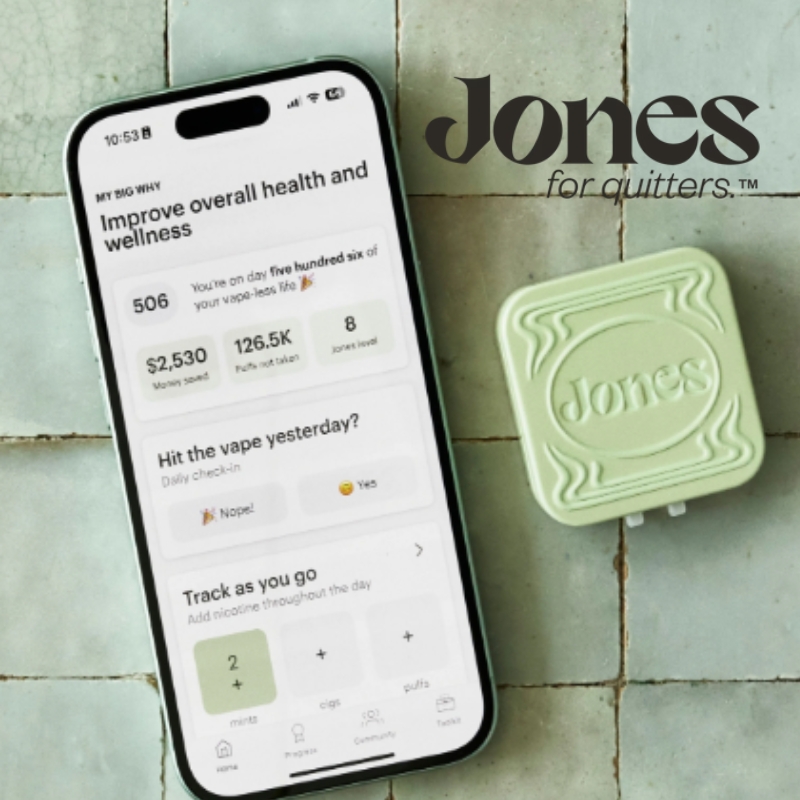
Quit with Jones offers a structured approach to reducing or quitting nicotine with clean, controlled nicotine mints and built-in behavioral support. Using nicotine replacement therapy (NRT), the mints deliver gradual doses to help manage cravings and withdrawal without the harmful chemicals found in vaping. Paired with a tracking app, text support, and a supportive community, Jones helps you build sustainable habits at your own pace. Designed for adults seeking a more manageable transition away from vaping or nicotine pouches, it’s a flexible, science-informed solution that fits into your daily routine—helping you take meaningful steps toward long-term nicotine independence.
Description
Nicotine use has evolved dramatically over the past decade. What was once primarily associated with cigarettes has expanded into vaping devices, nicotine pouches, and other alternative delivery systems. While many of these products are marketed as “modern” or “cleaner” alternatives, the underlying issue remains the same: nicotine is a highly addictive substance.
Millions of individuals are now attempting to reduce or quit nicotine entirely. However, many quickly discover that quitting is not simply a matter of willpower. Withdrawal symptoms, behavioral habits, and psychological triggers all contribute to relapse.
This is where structured approaches—such as nicotine replacement therapy (NRT) combined with behavioral support—enter the conversation.
Quit with Jones positions itself as a comprehensive system designed to support individuals through this process. Rather than relying on a single method, it combines multiple evidence-informed strategies into one program.
This article explores:
- How nicotine dependence works
- Why quitting is difficult
- What nicotine replacement therapy is
- How Quit with Jones is structured
- What users should realistically expect
Understanding Nicotine Addiction
Nicotine addiction is both biological and behavioral.
1. The Brain’s Response to Nicotine
When nicotine enters the body, it binds to receptors in the brain that release dopamine—a neurotransmitter associated with pleasure and reward. Over time:
- The brain creates more nicotine receptors
- The body becomes dependent on regular nicotine intake
- Absence of nicotine triggers withdrawal symptoms
These symptoms may include:
- Irritability
- Anxiety
- Difficulty concentrating
- Sleep disturbances
- Cravings
This biological dependency explains why quitting abruptly can feel overwhelming.
2. Behavioral Reinforcement
Nicotine use is also tied to daily routines:
- Morning habits
- Stress relief during work
- Social environments
- Oral fixation (especially with vaping)
Even if the chemical dependency is addressed, these behavioral patterns can persist.
Why “Cold Turkey” Often Fails
Many people attempt to quit nicotine by stopping abruptly—commonly referred to as “cold turkey.”
While this approach works for some individuals, research consistently shows that relapse rates are high.
According to widely cited public health data:
- A large percentage of individuals attempting to quit without support relapse within weeks
The reasons include:
- Sudden withdrawal intensity
- Lack of coping tools
- Unaddressed behavioral triggers
Quit with Jones highlights this challenge by noting that abrupt cessation can trigger significant withdrawal symptoms due to the brain’s adaptation to nicotine .
What Is Nicotine Replacement Therapy (NRT)?
Nicotine replacement therapy (NRT) is a widely used approach designed to help individuals reduce dependence on nicotine.
How NRT Works
Instead of delivering nicotine rapidly (as cigarettes or vapes do), NRT provides:
- Controlled doses
- Slower absorption
- Reduced “reward spikes”
This allows the body to gradually adjust while minimizing withdrawal symptoms.
Forms of NRT
Common NRT products include:
- Nicotine gum
- Lozenges/mints
- Patches
- Inhalers
- Nasal sprays
Regulatory Context
- NRT is approved by the U.S. Food and Drug Administration (FDA) for smoking cessation.
- It is commonly recommended by public health organizations such as the CDC and smokefree.gov.
- While not specifically approved for vaping cessation, many clinicians use it in that context.
The “Nicotine to Quit Nicotine” Concept
At first glance, using nicotine to quit nicotine may seem counterintuitive.
However, the key difference lies in delivery method and dosage control.
Traditional Nicotine Delivery:
- Rapid spikes in blood nicotine
- Reinforces addiction cycles
- Associated with harmful chemicals (in smoking/vaping)
NRT Delivery:
- Gradual release
- Lower peak levels
- No combustion or aerosol chemicals
This difference allows users to:
- Reduce cravings
- Stabilize withdrawal symptoms
- Focus on breaking habits
As described in the Quit with Jones material, NRT provides a “controlled dose” that helps manage withdrawal without exposure to harmful vape chemicals .
What Is Quit with Jones?
Quit with Jones is a structured nicotine reduction system that combines:
- Nicotine replacement therapy (mints/lozenges)
- Behavioral support tools
- Community engagement
The program is designed to address both:
- Chemical dependence
- Habitual behavior patterns
Core Components of Quit with Jones
1. Nicotine Mints (NRT)
The primary product is a nicotine lozenge/mint containing nicotine polacrilex.
Key characteristics:
- Dissolves slowly in the mouth
- Designed for gradual nicotine delivery
- Intended to reduce cravings
Users are instructed:
- Not to chew or swallow immediately
- Allow full dissolution for effectiveness
Typical usage guidelines:
- Every 1–2 hours initially
- Up to 20 per day depending on need
2. Behavioral Support
Research shows that combining behavioral support with NRT can improve outcomes.
Jones includes:
- Text-based encouragement
- Progress tracking tools
- Habit-building strategies
Behavioral support may increase quit success rates by 20–40% when combined with pharmacologic approaches .
3. Mobile App & Community
The app component focuses on:
- Tracking milestones
- Monitoring cravings
- Connecting users with others
Social accountability can play a significant role in behavior change.
The Structured Quit Plan
Quit with Jones encourages a step-by-step approach rather than abrupt cessation.
Example Framework:
- Set a quit date within a month
- Inform supportive individuals
- Prepare tools (NRT, app, snacks)
- Track progress
- Build complementary habits
This structured approach aligns with widely accepted behavior change models.
Typical Timeline for Quitting
A common NRT tapering schedule is approximately 10–12 weeks:
- Weeks 1–6: Frequent use (every 1–2 hours)
- Weeks 7–9: Reduced frequency
- Weeks 10–12: Further tapering
However:
- Individual timelines vary
- Some may need longer depending on dependency level
Quit with Jones emphasizes that pacing should be individualized .
Potential Benefits of a Structured Approach
1. Reduced Withdrawal Intensity
Gradual nicotine reduction may help:
- Minimize irritability
- Reduce cravings
- Improve adherence
2. Habit Rewiring
Behavioral tools allow users to:
- Replace routines
- Build new coping mechanisms
3. Increased Accountability
Tracking and community features may:
- Reinforce consistency
- Reduce isolation
Safety and Considerations
General Safety Profile of NRT
NRT has been studied for decades and is widely used.
However:
- It is not risk-free
- Side effects can occur
Possible side effects include:
- Nausea
- Hiccups
- Sleep disturbances
- Mild gastrointestinal discomfort
Who Should Consult a Healthcare Provider?
Before using NRT, individuals should seek medical advice if they:
- Are pregnant or breastfeeding
- Have cardiovascular conditions
- Are under 18
- Have known sensitivities to ingredients
Real-World Experiences (With Disclaimer)
Some users report:
- Reduced cravings within days
- Improved ability to avoid vaping
- Gradual decrease in nicotine use
Others note:
- Continued cravings
- Need for longer use
- Importance of combining multiple strategies
Important:
Individual experiences vary. Testimonials are not guarantees of results.
Limitations and Realistic Expectations
What Quit with Jones Is NOT
- Not an instant cure
- Not a guaranteed outcome
- Not a substitute for medical care
What It CAN Be
- A structured support system
- A tool for gradual reduction
- Part of a broader quitting strategy
How It Compares to Other Approaches
Cold Turkey
- High relapse rates
- No withdrawal management
Prescription Medications
- May require doctor supervision
- Different mechanism of action
NRT-Based Systems (like Jones)
- Over-the-counter accessibility
- Gradual tapering approach
- Behavioral integration
The Role of Personal Commitment
Even with structured support:
- Motivation remains critical
- Environment matters
- Stress management plays a role
Successful quitting often involves:
- Multiple attempts
- Iterative improvement
- Long-term habit change
Practical Tips for Quitting Nicotine
Regardless of method, these strategies may help:
1. Identify Triggers
- Stress
- Social settings
- Boredom
2. Replace the Habit
- Gum or snacks
- Physical activity
- Deep breathing
3. Track Progress
- Daily milestones
- Reduced usage patterns
4. Build Support Systems
- Friends and family
- Online communities
- Structured programs
Final Thoughts: Is Quit with Jones Worth Considering?
Quit with Jones represents a structured approach built around widely used principles:
- Nicotine replacement therapy
- Behavioral support
- Community engagement
For individuals struggling to quit nicotine—particularly vaping—it may offer a more gradual and manageable pathway compared to abrupt cessation.
However, outcomes depend on:
- Consistency
- Individual biology
- Level of dependence
- Support systems
Bottom Line
Quitting nicotine is not a single decision—it is a process.
Programs like Quit with Jones aim to make that process more structured, more supported, and potentially more manageable.
But like any tool in the health space, it should be approached with:
- Realistic expectations
- Proper guidance
- Awareness of limitations
Related products
-
Sale!
Advanced Bionutritionals Advanced Amino Formula
Original price was: $39.95.$33.25Current price is: $33.25. Buy From This Official Website -
NativePath Bladder Health
$40.99 Buy From This Official Website -
Sale!
CircO2
Original price was: $49.95.$41.50Current price is: $41.50. Buy From This Official Website -

Zealthy Hyperpigmentation Dark Spots
Buy From This Official Website